


Katrina changed the way the nation understood disaster preparedness, response, housing, and recovery. Twenty-one years later, another major shift is underway. FEMA reforms and new CDBG-DR requirements could reshape how survivors, states, and communities receive help after the next catastrophic disaster.
So, the question is urgent: If a Katrina-scale storm happened today, would the system work better?
To understand what these changes could mean in practice, we asked four IEM experts to reflect on what has changed since Katrina, what gaps remain, and what communities should watch next.
Before Katrina, There Was Pam
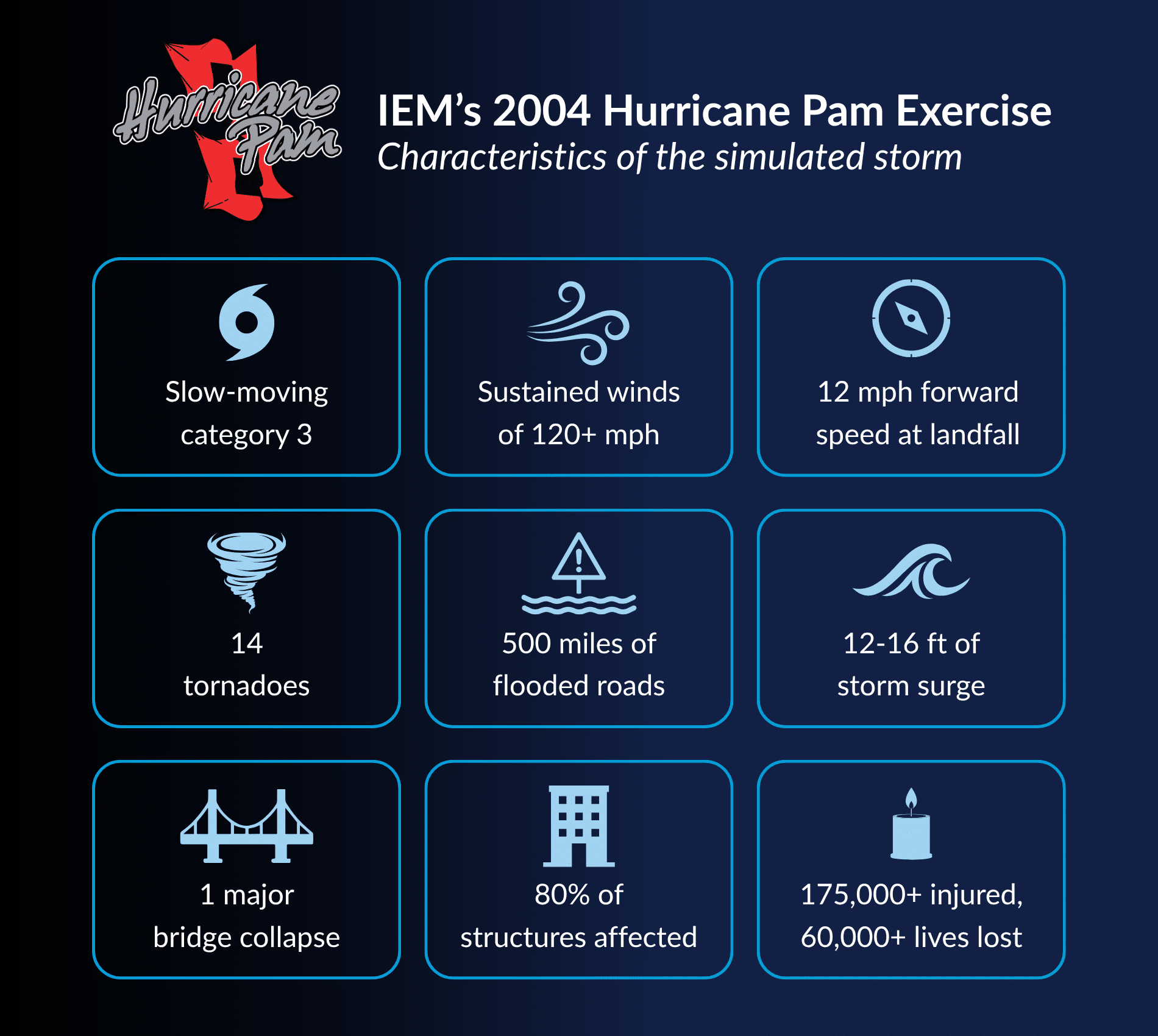
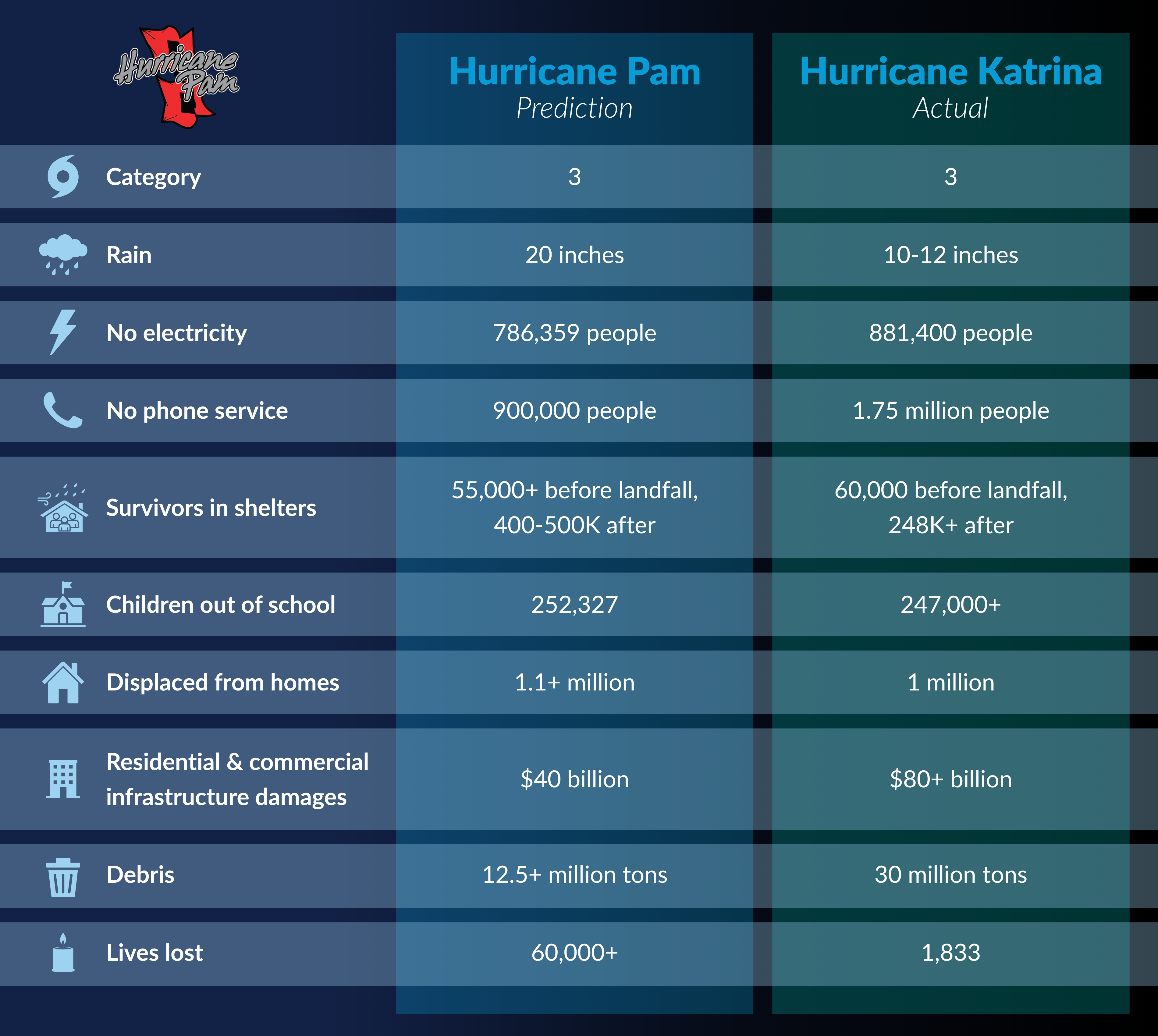
A year before Katrina, FEMA contracted IEM to plan and execute the Southeast Louisiana Hurricane Planning Project, known as Hurricane Pam. The exercise simulated a major hurricane striking New Orleans and anticipated many of Katrina’s later impacts, including levee failure, widespread displacement, prolonged flooding, and major rescue needs. When Katrina arrived, parts of Pam’s planning were used in the response, including concepts for water rescue staging and temporary medical operations. Pam did not prevent the devastation, but it proved an enduring lesson: planning saves lives, even when the work is unfinished. That lesson helped shape the post-Katrina reforms that restructured FEMA and required advanced disaster housing and recovery strategies.
Mississippi’s Recovery: What “Good” Looked Like
Mississippi’s Katrina story is defined by what effective recovery can look like. Jon Mabry, now IEM’s Senior Executive Advisor for CDBG-DR, was appointed by then-Governor Haley Barbour to lead Mississippi’s Disaster Recovery Division. Under his leadership, the state administered more than $5 billion in CDBG-DR funds and $3.1 billion in FEMA Public Assistance funds in a whole-government, whole-community approach whose impacts and programs are still seen and emulated today.

Jon Mabry, Senior Executive Advisor for CDBG-DR
“What made Mississippi’s CDBG-DR program work was a commitment to end-to-end accountability and management by the numbers, executed with the discipline of a private-sector operation and a deep compassion for survivors.
We held contractors, subrecipients, and ourselves to the same standards, resulting in 40,000 homes restored, more than 300 infrastructure projects completed, approximately 8,000 jobs created or retained, and an error and fraud rate of less than 1/10th of 1%.
Today’s reforms should build on that foundation by eliminating duplicative reviews and paperwork, so recovery dollars reach communities faster.”
What FEMA’s Review Council Wants to Change
In January 2025, President Trump established the FEMA Review Council to complete a full-scale evaluation of the agency. After more than a year of listening sessions, public comments, and internal debate, the Council released its final report on May 7, 2026, with ten recommendations aimed at shifting disaster response toward state and local leadership.
The Council’s recommendations point toward a faster, more state-led disaster system. Among the most significant proposals are:
- A simplified Individual Assistance model that could provide direct payments to homeowners.
- A redesigned Public Assistance process intended to move funds more quickly.
- A new mitigation funding model focused on rapid, phased funding.
The goal is speed. The risk is capacity. A more state-led model could work well for prepared jurisdictions, but it could also strain communities with fewer staff, fewer resources, or greater damage.

Chris Smith, Director of Recovery
“FAIR sounds efficient on paper; however, a large event like Hurricane Katrina illustrates some important tradeoffs. The proposal’s 15%-of-assessed-value payment formula could reduce assistance in lower-value home neighborhoods, such as parts of the Lower Ninth Ward, where rebuilding costs remained high despite low property values.
FAIR’s 75/25 federal-state cost share for housing assistance would also place greater financial responsibility on states that may already be fiscally and administratively overwhelmed during catastrophic disasters.
Combined with a broader shift of recovery responsibilities to states and local governments, the framework could accelerate aid delivery in routine events while creating significant challenges for large-scale, long-duration disasters.
The key question is whether simplicity and speed come at the expense of equity and capacity when communities face truly catastrophic losses.”
Disaster experts have already raised concerns that pushing more of the burden onto states, localities, and survivors themselves could overwhelm exactly the jurisdictions, often smaller, poorer, or those hit hardest, that need assistance the most.
Louisiana and Mississippi in 2005 had support from FEMA, HUD, and Congress at unprecedented scale, and recovery still took years, with many areas still bearing the marks. It’s a fair question whether a faster, more state-led model would have been better or worse for the Gulf Coast, and it’s one we don’t fully know the answer to yet.
What ROAD to Housing Changes for the Rebuild
Congress also passed the 21st Century ROAD to Housing Act, which became law on July 11, 202. The law touches nearly every part of federal housing policy, including disaster recovery housing.
Most notably, Title V of the bill includes the Reforming Disaster Recovery Act, authorizing HUD’s Community Development Block Grant – Disaster Recovery (CDBG-DR) program and creates the Long-Term Disaster Recovery Fund for major declared disasters. The goal is to move funding more quickly after disasters and give states and localities clearer timelines for recovery planning, including HUD determinations within 90 to 120 days.

Marion McFadden, Vice President of Disaster Recovery
“Hurricane Katrina was the first disaster that I worked on where HUD was tasked to support the rebuilding of damaged housing on such a large scale. The federal government had never funded the widespread rebuilding of privately owned homes, and HUD and the impacted states had to move quickly to design programs for both homeowners and renters.
HUD offered waivers and flexibility, but not a recovery plan. That left states to make difficult decisions about who to serve, how funds could be, and how much assistance homeowners should receive. In Louisiana, for example, different grant amounts were provided depending on whether homeowners chose to move or to rebuild, without fully accounting for the neighborhood-level impact of creating a patchwork of rebuilt homes and state-owned vacant properties.
If the Reforming Disaster Recovery Act had been in place twenty years ago, there would have been significantly less stress on the people administering programs and more thoughtful design of programs that appropriately balanced individual needs with community needs, which Louisiana has done very well in subsequent disaster programs.
Because of this change, jurisdictions will now quickly know whether HUD will fund their recovery and can plan recovery programs in advance, learning from the successes and failures of more than 20 years of CDBG-DR recovery programs.”
The law is an important step, but it is not the finish line. It does not include new appropriations and authorizes CDBG-DR for only three years, meaning future funding and longer-term authority will still require congressional action.
As HUD turns the ROAD to Housing Act into program requirements, its Federal Register notice gives states, territories, local governments, recovery practitioners, and community advocates a direct opportunity to shape the future of CDBG-DR.
Would It Work? The Honest Answer Is: We Don’t Know Yet
Katrina showed that planning saves lives and that unfinished systems fail under pressure. FEMA and housing reforms now offer a chance to strengthen recovery before the next catastrophic disaster. But the promise of faster assistance will only matter if states, localities, and survivors have the capacity, clarity, and support to use it. The real test is not whether the system looks better on paper. It is whether it works when communities need it most.
Dig deeper on the 21st century ROAD to Housing Act in our DisasterSmiths podcast!
Faster Recovery, Stronger Communities: Inside the 21st Century ROAD to Housing Act