Services:
Client
New York Governor’s Office of Storm Recovery (GOSR)
Challenge
A $1.75B housing recovery program was moving too slowly under a previous contractor, leaving tens of thousands of homeowners waiting for help
Solution
IEM reengineered and streamlined operations, replacing a 400-person workforce with an expert team of 150 across five service centers
Outcome
1,800+ homeowners supported, $900M+ in assistance distributed, $40M in savings generated, and 6,000 new homeowners enrolled in a single month
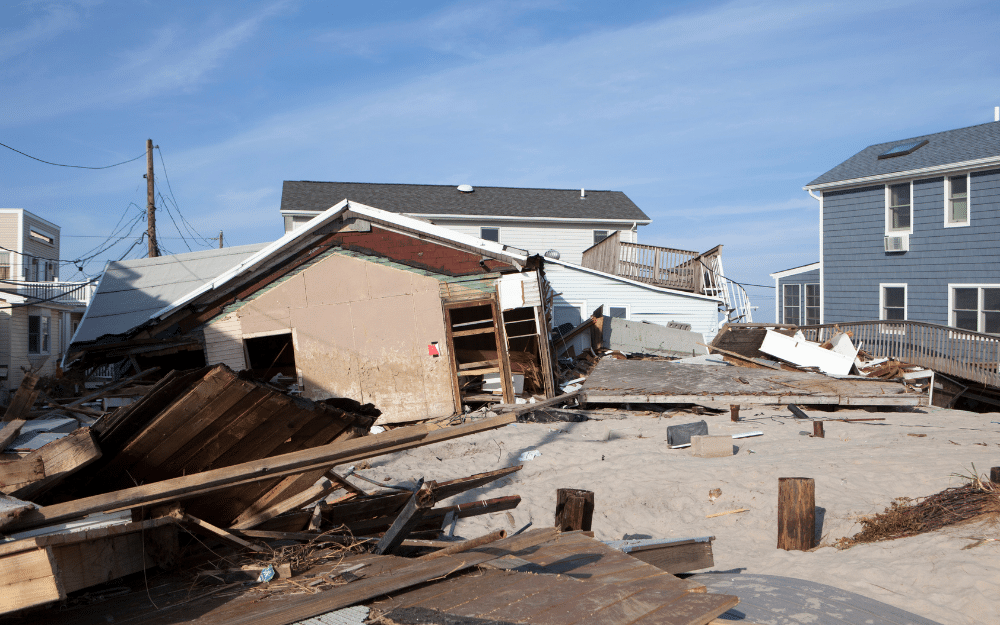
When Superstorm Sandy made landfall on October 29, 2012, it didn’t just damage homes, it upended lives. IEM stepped in to manage one of the most complex disaster recovery programs in New York history, supporting over 1,800 homeowners, distributing more than $900M in assistance, and generating $40M in savings for the State, all while cutting the program’s workforce from 400 to 150 without sacrificing speed or service quality.
The Scale of the Disaster
Initially classified as a Category 1 hurricane, Sandy merged with a cold air mass, transforming into a powerful extratropical cyclone now known as Superstorm Sandy. It made landfall near Atlantic City, New Jersey, on October 29, 2012, with winds reaching 80 mph, causing extensive damage across both New York and New Jersey.[1]
In New York City, the storm primarily brought heavy rainfall and wind, killing 44 New Yorkers, damaging approximately 300 homes, and leaving thousands without power. The economic toll was devastating: damages and economic impact in New York City alone were estimated at $19B, with over 69,000 residential units affected by the storm. Through the Disaster Relief Appropriations Act of 2013, New York City received roughly $4.2B in CDBG-DR funding to aid in recovery and rebuilding efforts following Sandy.[2]
Managing that investment effectively and getting it to the people who needed it most was the challenge IEM was brought in to solve.
Recognizing the Need: A Stalled Recovery Leaving New Yorkers Behind
IEM was engaged to provide program management support to the New York Governor’s Office of Storm Recovery (GOSR) for its $1.75B New York Rising Housing Recovery Program. The program had already been underway under a previous contractor, but it wasn’t moving fast enough or efficiently enough for the tens of thousands of New Yorkers still waiting for help.
Following the transition from the previous contractor, IEM took immediate initiative to reengineer, automate, and streamline processes, reducing implementation costs while accelerating the pace of recovery and ensuring impacted homeowners received assistance as quickly as possible.
The IEM Approach: Leaner, Faster, Better
IEM’s CDBG-DR subject matter experts didn’t just maintain the program. They transformed it. We replaced the prior contractor’s workforce of 400 employees with a more efficient, expert team of 150 across five service centers, meeting program demands effectively while raising service standards and accelerating production, enabling New Yorkers to recover and rebuild as quickly as possible.
Our team conducted program intakes, damage assessments, eligibility reviews, benefit duplication reviews, award calculations, closeouts, and appeals for nearly 20,000 applicants.
The State of New York faced numerous challenges, including large-scale grant management, fraud prevention, risk management, evolving policy guidelines, and the necessity for a clear path forward. IEM addressed each one directly, providing technical assistance and guidance on policies and procedures to both state and local leadership, developing rigorous processes to review duplication of benefits, and sharing best practices in case management to ensure homeowners received the support they needed in a timely manner.
IEM managed various housing programs and oversaw mitigation techniques, including property elevation, global match/buyout, rehabilitation, and reconstruction. Our teams collaborated with multiple local, state, and federal partners, including the Federal Emergency Management Agency (FEMA), the Small Business Administration (SBA), the Department of Health and Human Services (HHS), and the U.S. Department of Housing and Urban Development (HUD), ensuring seamless coordination across every level of the recovery ecosystem.
Reaching the People Who Needed Help Most
Effective program management is crucial, but it holds little value if impacted residents are not informed about the available support. IEM engaged in extensive outreach and educational efforts specifically designed to reach vulnerable populations: the communities most at risk of being left behind in the recovery process.
Through targeted partnerships with community organizations, IEM successfully brought in 6,000 new homeowners in just one month, connecting thousands of families to critical resources they might otherwise never have accessed.
The IEM Impact: Results That Delivered for New York
The numbers tell the story:
- 🏠 1,800+ homeowners supported through the recovery program
- 💰 $900M+ in vital assistance distributed to impacted residents
- 📉 $40M in savings generated for GOSR by eliminating inefficiencies and maximizing every dollar for those in need
- 👥 Program workforce reduced from 400 to 150 across five service centers — while accelerating production and raising service quality
- 📋 Nearly 20,000 applicants managed through the full case lifecycle, from intake through closeout
- 📣 6,000 new homeowners enrolled in a single month through community outreach partnerships
A Commitment That Doesn’t Waver
The aftermath of Superstorm Sandy was devastating to communities across the northeast. At IEM, our commitment to New York and the communities we serve remains steadfast and unwavering. Together with our partners, our teams worked tirelessly to ensure that families received the crucial assistance they needed to rebuild their lives and restore hope in the wake of disaster.
From reengineering stalled programs to standing up new ones from scratch, IEM has the experience, technology, and team to deliver results when communities need it most. Our work in New York is proof of what’s possible when program management is done right.
Why Recovery Agencies Choose IEM for CDBG-DR Housing Recovery
- Rapid program turnaround – IEM doesn’t just inherit stalled programs — we reengineer them, replacing inefficiency with streamlined operations that accelerate assistance to survivors from day one
- Proven large-scale case management – With nearly 20,000 applicants managed through the full case lifecycle, IEM brings the operational depth to handle the most complex, high-volume housing recovery programs in the country
- Smart workforce strategy – IEM delivers more with less, demonstrated by replacing a 400-person workforce with an expert team of 150 that raised service standards while accelerating production and cutting costs
- Measurable financial stewardship – From duplication of benefits reviews to fraud prevention and grant management, IEM’s rigorous oversight generated $40M in savings for New York while maximizing assistance for those who needed it most
- Vulnerable population outreach – IEM goes beyond program administration to actively connect underserved communities to recovery resources, enrolling 6,000 new homeowners in a single month through targeted community partnerships
- Multi-agency coordination – Deep experience collaborating across FEMA, HUD, SBA, HHS, and state and local partners ensures seamless program delivery at every level of the recovery ecosystem
Faster recovery. Smarter program management. More resilient communities.
Talk to Our Disaster Recovery Experts →






Pamela Patenaude
Senior Executive Advisor
References:
[1] Britannica. Superstorm Sandy. https://www.britannica.com/event/Superstorm-Sandy
[2] New York City. Impact of Hurricane Sandy. https://www.nyc.gov/site/cdbgdr/hurricane-sandy/hurricane-sandy.page