
Preparing & Predicting
Remembering Those Impacted by Katrina

August 29, 2025 marked the 20th anniversary of Hurricane Katrina, a profound moment that reshaped U.S. disaster response and recovery. As we remember the lives affected and the communities rebuilt, we are reminded of the strength of the human spirit and lessons learned from our past.
One of the more prophetic Katrina-related moments came during IEM’s 2004 Hurricane Pam exercise, formally known as the Southeast Louisiana Hurricane Planning Project. IEM, with numerous federal and state agencies, created a catastrophic planning exercise predicting the impact of a major storm in Louisiana. The first-of-its-kind, functional, scenario-based exercise would later help guide preparedness and response efforts, eerily foreshadowing Katrina’s impact.
To learn more about the Hurricane Pam exercise and how it helped guide some of the Katrina response, we spoke to IEM’s founder, Madhu Beriwal, the IEM project team, and state, federal, and local officials who served as pivotal leaders during the exercise and the response to Katrina. This video highlights Hurricane Pam’s legacy, including the impact it had on the Katrina response efforts and the future of emergency management.
🔍Explore more
Pam and the impacts IEM made on disaster response and recovery – Learn More
Mississippi’s Recovery after Katrina – Learn More
Scientific Bullseye
Forecasting Reality: Key Predictions from Hurricane Pam
When Hurricane Katrina struck a year later, the Hurricane Pam scenario proved to be what has been called a “scientific bullseye.” Many simulated predictions happened in real life, and local officials applied Hurricane Pam knowledge to Katrina response and recovery efforts.
My recollections stem from my role as Senior Counsel to the Senate Committee on Homeland Security and Governmental Affairs for the Special Investigation of Hurricane Katrina. The Investigation came into being at the direction of Senator Susan Collins from Maine, who then chaired the Committee. Senator Collins was familiar with my background in emergency response and restoration because I served as senior management of Maine’s principal electric and gas utility, Central Maine Power Company, when Maine was hit with a “500-Year Storm,” the ice storm of 1998. That storm disabled two-thirds of CMP’s electric grid and required a massive response involving resources from numerous states and Canadian provinces. While it took over three weeks to fully restore power, the public gave CMP high marks for its restoration efforts and the thoroughness and timeliness of its customer communications.
At the outset of the Investigation, Senator Collins faced the daunting task of assembling a sizeable investigative staff with relevant skills and expertise. One of her first phone calls was to David Flanagan, who had been CEO & President of CMP during the 1998 Ice Storm. Mr. Flanagan agreed to head up the Investigation. He and I had worked closely together in CMP senior management for 15 years. When he inquired about my possible interest in serving as Senior Counsel to the Investigation, I readily accepted.The Investigative staff was organized into sections assigned to disaster response at the federal, state, and local levels, respectively. I was assigned to the portion of the Investigation focused on state-level disaster response in Louisiana.
The Investigation proceeded in several phases over a nine-month period—information gathering through document requests to federal, state, and local government authorities; public hearings (ultimately 23 of them); on-the-record depositions of government officials; and a massive report of findings and recommendations. The latter would later serve as the basis for legislation reorganizing FEMA.
Hurricane Pam played a major role in all aspects of the Investigation. With her role as Chairman & CEO of IEM, the firm retained by FEMA in 2004 to organize Hurricane Pam as an exercise to prepare the government’s response to a massive hurricane that could strike New Orleans, the Committee was eager to have Madhu Beriwal testify. It was through her testimony that the Committee and Investigative staff first learned of the vital role of Hurricane Pam’s findings and recommendations, although they were not yet finalized at that time, in informing the response of government authorities to Hurricane Katrina. The usefulness of Hurricane Pam owed in no small measure to the striking similarity between the assumptions about the characteristics of the fictional Pam and the actual characteristics of Katrina.
Ms. Beriwal’s testimony on Hurricane Pam was a revelation to the Investigation. Early media coverage of Hurricane Katrina, admittedly hampered by the extent of the Hurricane’s devastation, focused on the seeming chaos of the response efforts. Hurricane Pam revealed that the story was far more complex. While there was chaos, Hurricane Pam showed that most aspects of Katrina were anticipated in Hurricane Pam, which was undertaken just a year before. As outlined in the U.S. Senate Report “HURRICANE KATRINA: A NATION STILL UNPREPARED,” government authorities and ultimately the public benefited from Pam’s recommendations even though they had not yet been finalized.
In my recollections of Pam and Katrina, Ms. Beriwal stands out for her singular contributions to disaster response and recovery. Of the numerous officials and other witnesses who testified in hearings and depositions, Ms. Beriwal was easily the most knowledgeable and articulate. It comes as no surprise that she has built IEM into the leading firm in the field of emergency management.
Like my fellow staff, I was awed by the scope of the devastation wrought by Katrina and felt sympathy for the families and individuals who suffered grave loss of life and property, not to mention physical hardship. I also felt appreciation and gratitude for the countless government employees and volunteers who participated in recovery efforts at great risk to their own personal safety
Arthur W. Adelberg, Senior Counsel to the Senate Committee on Homeland Security and Governmental Affairs for the Special Investigation of Hurricane Katrina
“Katrina taught us that true recovery is not just about rebuilding what was lost. It is building back better and more resilient. The CDBG-DR program has evolved to emphasize recovery as well as resilience, helping communities prepare for future challenges while addressing present needs.”
Pamela Patenaude, from 2017-2019, Patenaude served as Deputy Secretary of the U.S. Department of Housing and Urban Development (HUD).
“I truly believe a value cannot be placed on the dedication and the insights of IEM’s many contributions in helping our nation become better prepared to respond as well as recover in the many catastrophic events that have occurred throughout the years. Exercises such as Hurricane Pam should be considered one of the most valuable preparedness tools the emergency management community has. It’s critical that these tools are utilized and, most importantly, when vulnerabilities are identified, they are addressed to the fullest.”
– Ellen Gordon (ret.), former Director, NPS CHDS Executive Leaders Program; former Iowa Emergency Management Administrator and Homeland Security Advisor
Special report of the Committee on Homeland Security ad Government Affairs
U.S. Senate with Additional Views
Hurricane Pam 2004 was more than an exercise. It was a unique planning endeavor that resulted in functional plans that were considered for and actually put to use in real-life situations before, during, and after Hurricane Katrina. Most exercise participants agreed that many of the plans were useful even though they were not final. Though they needed some cleaning up, the resulting drafts were “fightable,” that is, “detailed enough to be implemented and to guide response and recovery operations.”
Read Full Report >“Hurricane Pam was the beginning of building such a catastrophic event plan. On August 29, 2005, it was at an Alpha stage of release, a version 1.0 of the final. Hurricane Katrina demanded a version 10.0. I urge this committee to consider the value of the Hurricane Pam process and the foundation it offers for other catastrophic plans. From the start, Hurricane Pam was meant to serve as a test-bed for catastrophic planning for other locations.”Madhu Beriwal, President and CEO, IEMJanuary 24, 2006
“Government authorities and ultimately the public benefited from Pam’s recommendations even though they had not yet been finalized. “
Arthur W. Adelberg, Senior Counsel to the Senate Committee
Pam’s Legacy
Hurricane Pam has been featured multiple times since 2004 because of its impact.

Upstream: The Quest to Solve Problems Before They Happen by Dan Health
“My favorite story is about Hurricane Pam. It was not an actual hurricane but a simulated one contracted by FEMA to plan for a major hurricane to hit New Orleans. This simulation started over a year before Hurricane Katrina….. the chilling fact was that the Hurricane Pam simulations were similar to what happened with Katrina.”
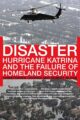
Disaster: Hurricane Katrina and the failure of Homeland Security by Christopher Cooper
“Innovative Emergency Management Inc. (IEM), the Baton Rouge consulting company hired to build the computer models that brought Pam to life, deliberately avoided special effects. Rather, the company sought to turn disaster planning on its head by creating a believable scenario and then inviting the participants to grapple with its effects.”